
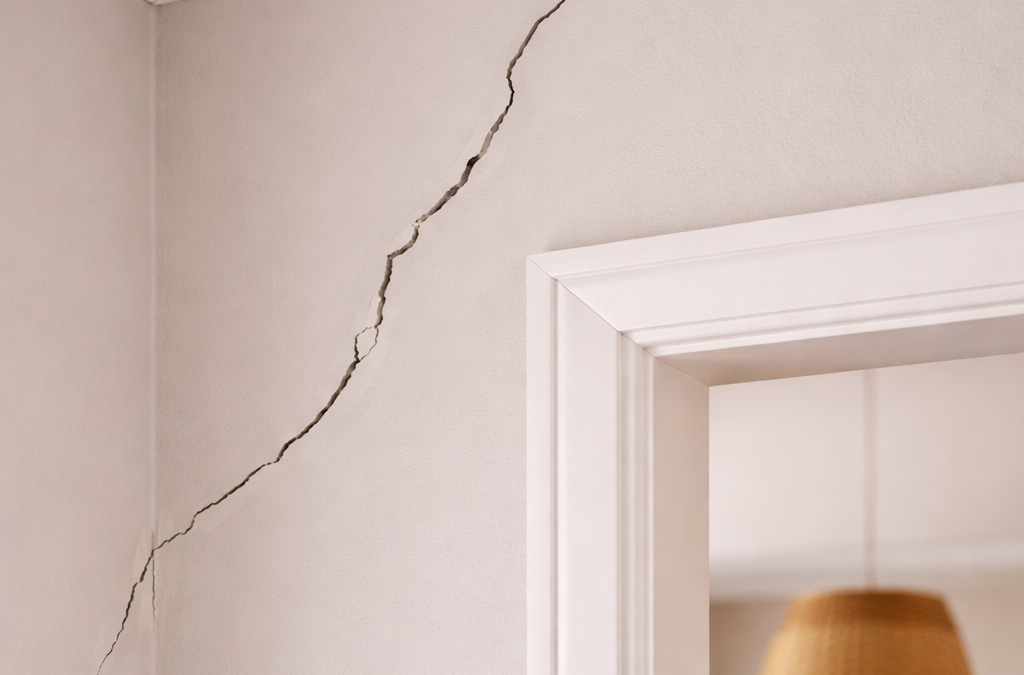
Cracks in walls can be worrying, and it’s one of the most common reasons homeowners get in touch with us. The good news is that, in most cases, cracks are not a sign of serious structural problems and don’t threaten the stability of the building.
So what causes cracks to appear?
Settlement Cracks
Older homes often show signs of settlement. This happens when the weight of a building gradually compresses the soil beneath its foundations, causing slight downward movement.
Solid sections of wall tend to settle more evenly than areas with openings such as windows and doors. As a result, vertical cracks can form between these areas. Settlement usually occurs early in a building’s life and is limited, meaning the movement eventually stops.
Thermal Movement
All buildings are affected by changes in temperature and humidity. Materials such as brick, concrete, timber, and steel naturally expand and contract as conditions change.
Because different materials react at different rates, small stresses build up within the structure. Over time, these stresses can lead to cracking, particularly around junctions or where different materials meet.
Shrinkage
Another common cause of cracking is shrinkage. Many building materials are applied in a wet state and shrink as they dry out. If this drying happens too quickly, or if the work isn’t properly controlled, noticeable cracks can appear.
Although these cracks can look alarming, they are usually cosmetic rather than structural.
When Should You Be Concerned?
While most cracks are harmless, it’s always sensible to seek advice if:
- Cracks appear suddenly or worsen quickly
- Cracks are wide or stepped
- You notice doors or windows sticking
A professional inspection can help determine whether movement is ongoing or simply part of the building’s natural behaviour
Need Reassurance?
If you’re worried about cracking in your home, a survey by a qualified professional can often provide peace of mind. In many cases, the issue is minor and easily explained — and far less serious than it first appears