
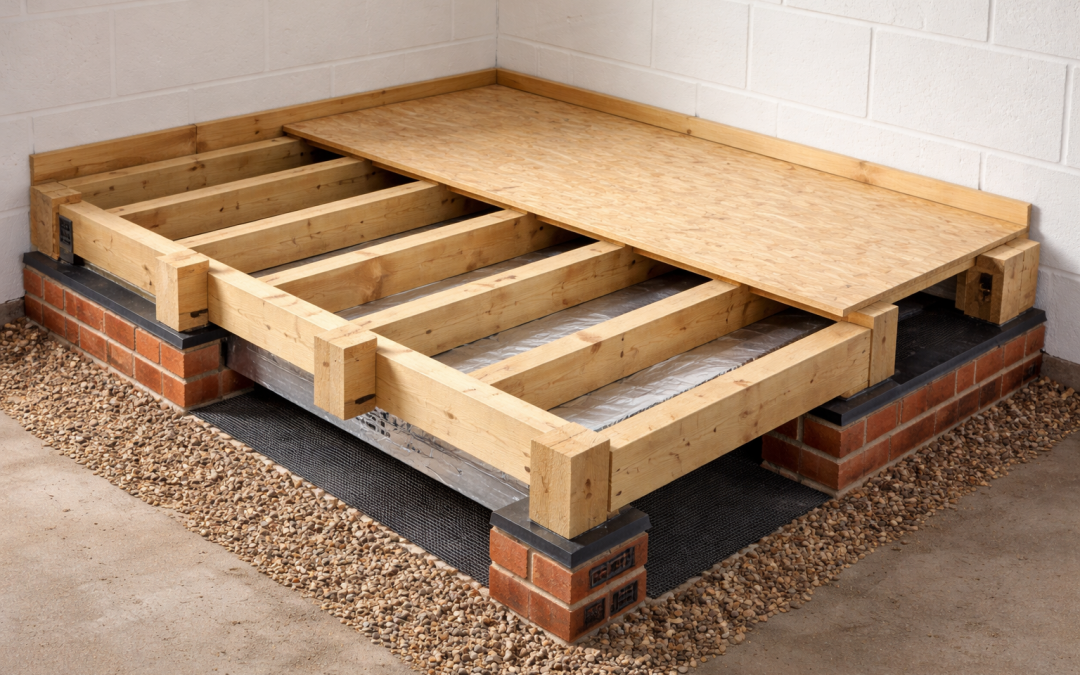
You may have noticed perforated bricks or metal vents at the base of external walls and wondered what they are for. Some homeowners even see them as a source of cold drafts, especially after removing carpets to reveal original floorboards.
These vents, often called airbricks, are essential for keeping your home healthy. They allow air to circulate beneath a suspended timber floor, removing damp, stagnant air from the void. That draft you feel around the edges of a room or through newly exposed floorboards. That is a sign the vents are doing their job. Proper ventilation helps prevent dry rot and decay in the floor timbers.
Dampness under a suspended timber floor is quite common in older homes, particularly those built before the Second World War. These buildings often lack modern damp-proof membranes, meaning moisture from the ground can accumulate under the floor. Without enough airflow, this damp air can cause considerable damage over time.
Key Takeaway
Airbricks and subfloor ventilation may feel like a nuisance, but they protect your home from timber decay and long-term damp issues. Blocking these vents or covering them with paving or solid floors can lead to costly problems down the line.