
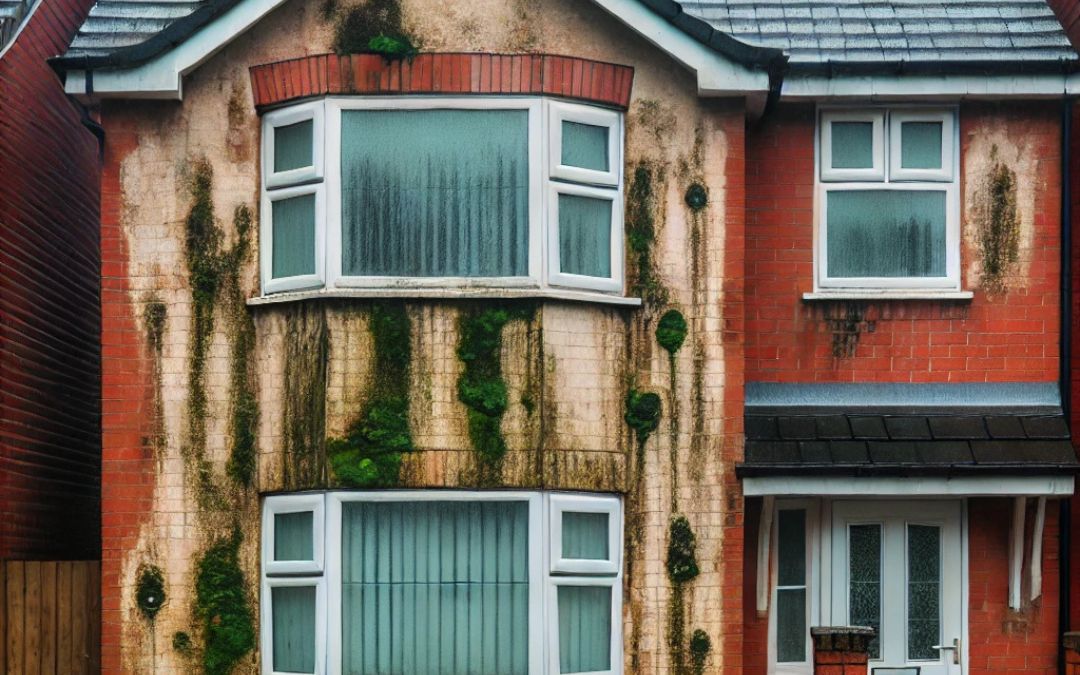
Understanding and Identifying Common Damp Issues.
Damp can impact any property, but period homes are particularly vulnerable. Not only does it create an unattractive appearance, but it can also contribute to health concerns, including allergies, asthma, and other respiratory conditions.
Damp can be tricky to deal with but knowing what type you are facing is the first step. Here, we break down the three types of damp, how to spot them, and what you can do to fix the problem. And if you are buying a home with damp, it is always best to get expert advice before deciding.
Protecting Your Property from Penetrating Damp
Moisture infiltration through ceilings, walls, and floors leads to penetrating damp, also referred to as lateral damp. Homes with faulty plumbing, leaking roofs, damaged gutters, missing roof tiles, or poorly sealed doors and windows are especially vulnerable to this problem.
Indicators of damp issues include deteriorating plaster, decayed skirting boards and floor timbers, and visible damp patches on walls. When condensation accumulates on cold surfaces, it creates the perfect environment for mould to develop.
Fortunately, this type of problem is often easy to fix once the source of moisture has been located and addressed.
Identifying and Addressing Rising Damp
This issue arises when moisture from the ground is absorbed into a building’s structure.
Moisture ingress is often attributed to external conditions, including high ground levels that compromise the damp-proof course (DPC), external finishes that obscure the DPC and reach the ground, faulty gullies, or leaking subterranean drainage systems.
Manifestations of rising damp include horizontal staining on walls, not exceeding one meter in height. This condition leads to the degradation of plasterwork, paint, and wallpaper. As it progresses, wooden elements such as skirting boards and flooring become susceptible to decay. Additionally, a characteristic musty smell often permeates the affected rooms.
Addressing this concern often involves practical steps like decreasing external ground levels, refining external wall details, and repairing any damaged rainwater or drainage pipes. Implementing these measures can effectively resolve the issue and protect your property from further damage.
While chemically injected DPCs can be effective, it is important to recognize that they may not always provide a lasting moisture barrier, as they often address only the symptoms rather than the root causes.
There is no immediate need for internal replastering. Once the damp source is resolved, your walls will gradually dry to acceptable levels, a process that could take up to 18 months.
In older structures lacking a DPC, complete damp eradication is seldom achievable. However, by addressing the underlying causes, damp levels can often be reduced to acceptable thresholds, preventing significant structural or health issues.
Condensation Damp Explained: How to Detect and Treat It
Condensation damp is a common problem caused by water vapour accumulating inside the property, unable to escape. This trapped moisture often manifests as mould with blurred, soft edges. Unlike penetrating damp, which is more prevalent during periods of heavy rainfall, condensation damp tends to worsen in colder weather.
The presence of condensation damp typically points to underlying problems, such as insufficient ventilation or air conditioning. Regularly turning central heating on and off can worsen condensation issues.
Condensation damp is a common issue that can be effectively addressed by ensuring proper ventilation throughout the home. Regularly opening windows, even briefly, can significantly improve air circulation. In areas prone to high humidity, such as kitchens and bathrooms, installing extractor fans or using dehumidifiers can further reduce moisture levels.