
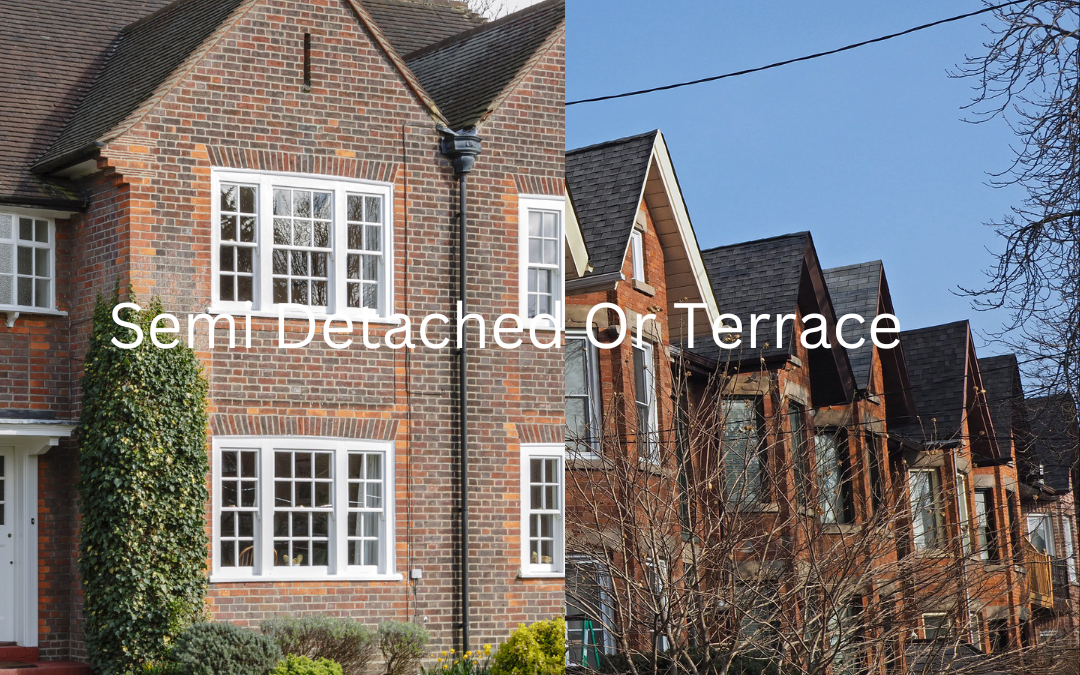
The Northeast housing market has seen the cost of detached homes rise close to £300,000, leading more buyers to explore semi-detached or terraced properties. However, each type of home comes with its own set of pros and cons. What do potential buyers need to know?
The Benefits of Living in a Terraced Home
Dating back to the 17th century in Europe, terraced houses—also called row homes or townhouses—are a series of identical properties-built side by side. Most share walls with neighbours on both sides, except for the homes located at the ends of the row.
Terraced properties are an economical choice, often costing less than detached or semi-detached homes in the same area. Their structure, nestled between other houses, provides excellent insulation and energy efficiency by trapping heat more effectively.
Disadvantages of Terraced Homes:
Noise can be a significant issue in terraced houses, especially in older builds that were constructed before modern soundproofing standards were introduced. Living next to loud neighbours might quickly become a noticeable inconvenience.
A common concern with terraced homes is parking availability. Even if there is room to park near the property, local regulations, such as residents’ parking schemes, might limit access. Be sure to check the rules before making a commitment.
Gardens in terraced houses are typically small, given the limited outdoor space available. Access can also be an issue—does either you or your neighbour need to pass through the other’s garden to get to your own?
The interior spaces of terraced properties are often more confined, with smaller rooms and narrower stairways than those found in semi-detached houses. This could present difficulties for families looking for more room to grow.
A potential issue for end-terrace homes is their susceptibility to the “bookend effect,” where heat from the sun causes the terrace walls to expand slightly. The end houses bear the most stress, which could lead to wall cracks or warped door and window frames. Thankfully, this is an unusual occurrence.
If you plan structural alterations in a terraced property, the Party Wall Act may come into play, requiring you to notify your neighbours and potentially secure their approval for significant renovations. This can also mean incurring extra costs for Party Wall Surveyor services.
The Benefits of Living in a Semi-Detached Home
Rising to prominence in the UK during the 1920s and 1930s, semi-detached homes are a pair of houses joined by a single shared wall. Known as duplexes in other regions, they often have symmetrical, mirrored layouts inside.
Many semi-detached houses come with a driveway, which means you do not have to worry about parking issues. Their gardens are generally larger than those of terraced properties, giving families somewhere to play and socialise. If there is not a driveway, it may be possible to convert part of your garden into a parking space.
One of the advantages of semi-detached houses is the presence of a driveway, which resolves parking issues. Their gardens are typically larger than those found in terraced homes, providing extra room for outdoor activities. If there is not a driveway, converting part of the garden into one could be a viable option.
Disadvantages of Semi-Detached Homes:
The biggest downside to semi-detached properties is their price, which is typically higher than that of a terraced house in the same area. However, they tend to be less expensive than detached homes.
Semi-detached homes come with the downside of sharing a party wall, which could lead to potential noise and privacy issues. Additionally, if you plan major alterations, you will need to adhere to the Party Wall Act, like terraced properties.
Remember, some properties are leasehold rather than freehold. In such cases, you may be liable for additional costs like ground rent and maintenance fees to the landlord or freeholder.
At S Jones Surveying, we take pride in our commitment to excellence in surveys and valuations, recogniseing the crucial financial consequences our work may have for our clients. Our services cover a broad spectrum, including lease extensions, freehold enfranchisement, matrimonial settlements, inheritance tax evaluations, and shared ownership assessments. For a residential property valuation, contact us directly or complete the enquiry form on our website.