
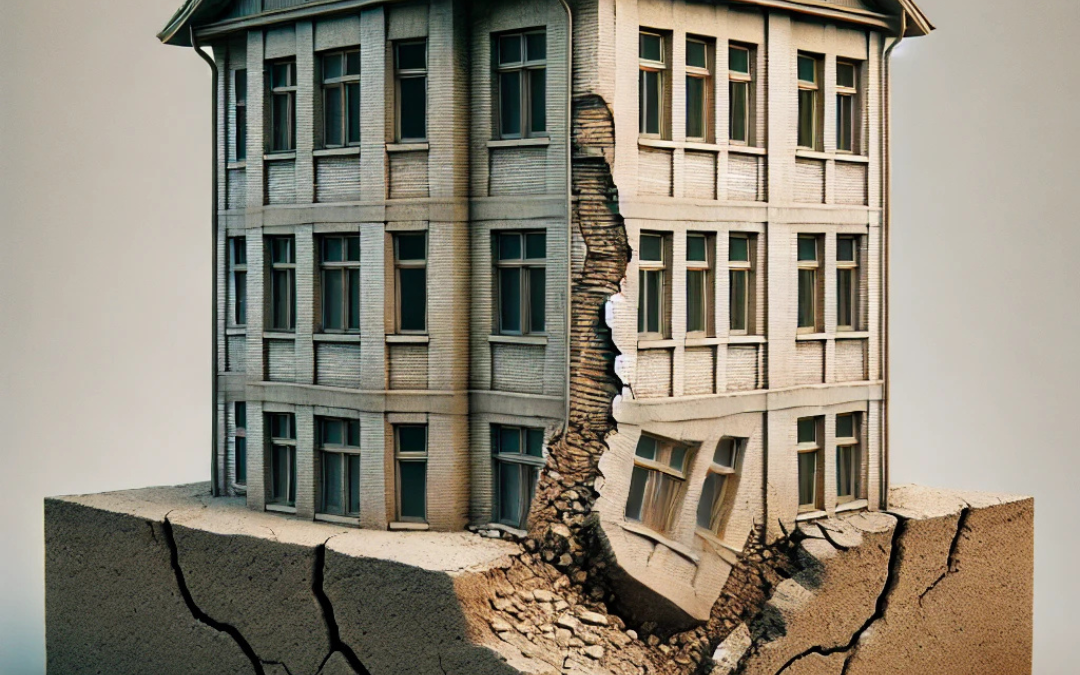
Recognising Subsidence Issues.
Subsidence can be a worrying issue for homeowners and buyers alike, but with the right knowledge, it does not have to be a deal-breaker. Understanding its causes, warning signs, and practical solutions is crucial when purchasing a property. In this guide, we explain everything you need to know to make informed decisions and protect your investment.
Understanding the Basics.
When the ground beneath a property’s foundations starts to sink, it leads to subsidence a potentially serious structural issue. This shift can cause visible cracks in plaster and brickwork, uneven flooring, and difficulty opening doors or windows. While concerning, subsidence can often be managed with the right intervention if detected early.
The Factors Behind It.
Soil moisture loss is a leading cause of subsidence, often resulting from extended dry weather or vegetation growing too close to a property. Tree and shrub roots absorb significant amounts of water, sometimes destabilising the ground.
Think only dry soil causes subsidence? Think again! Too much water can be just as damaging. A leaking drainpipe can slowly weaken the ground beneath your home, increasing the risk of foundation movement. If your house is near a quarry or an old mine, shifting infill material could also cause instability over time. Staying aware of these issues can help protect your property from considerable damage.
Which Properties Are Most Vulnerable?
While it is easy to assume that certain buildings are more prone to subsidence, the determining factor is the stability of the soil beneath them. Understanding the ground conditions around a property is key to assessing its true risk.
If you own a conservatory or live in a Victorian or Edwardian home, you might wonder if subsidence is a concern. Properties with shallow foundations can be more vulnerable, but older homes built with lime mortar often fare better. Their construction is more adaptable to shifting ground, reducing the risk of severe structural damage.
While new-build homes may experience movement in their early years, this is usually settlement rather than subsidence. Settlement occurs as the ground compresses and adapts to the structure’s weight, a normal process that rarely leads to long-term issues. Homeowners should monitor any changes, but in most cases, there is no cause for concern.
Dealing with the Problem Effectively.
Buying a home? Unexplained cracks could be a warning sign! Before making an offer, note any visible cracks inside or outside and flag them to your surveyor. A thorough inspection can help you avoid costly surprises down the line.
Thinking of buying a house? A full building survey is a smart investment! It can uncover hidden structural issues, damp problems, or poor roofing, giving you a clear picture of what you are buying before committing to the purchase.