
Most homeowners understand how important it is to keep rainwater out of the roof. Leaks, broken tiles, or blocked gutters can all cause severe damage if left unchecked. But what about moisture that forms inside the roof space due to condensation — can that be just as harmful?
As with many things in buildings, the answer is: sometimes, but not always.
How Does Condensation Form in a Loft?
Everyday living creates moisture inside your home. Cooking, showering, drying clothes, and even breathing all release water vapour into the air. Warm air can hold more moisture than cold air, so when warm air cools down, it releases some of that moisture as water.
You have seen this on cold windows in the morning — loft condensation works in much the same way.
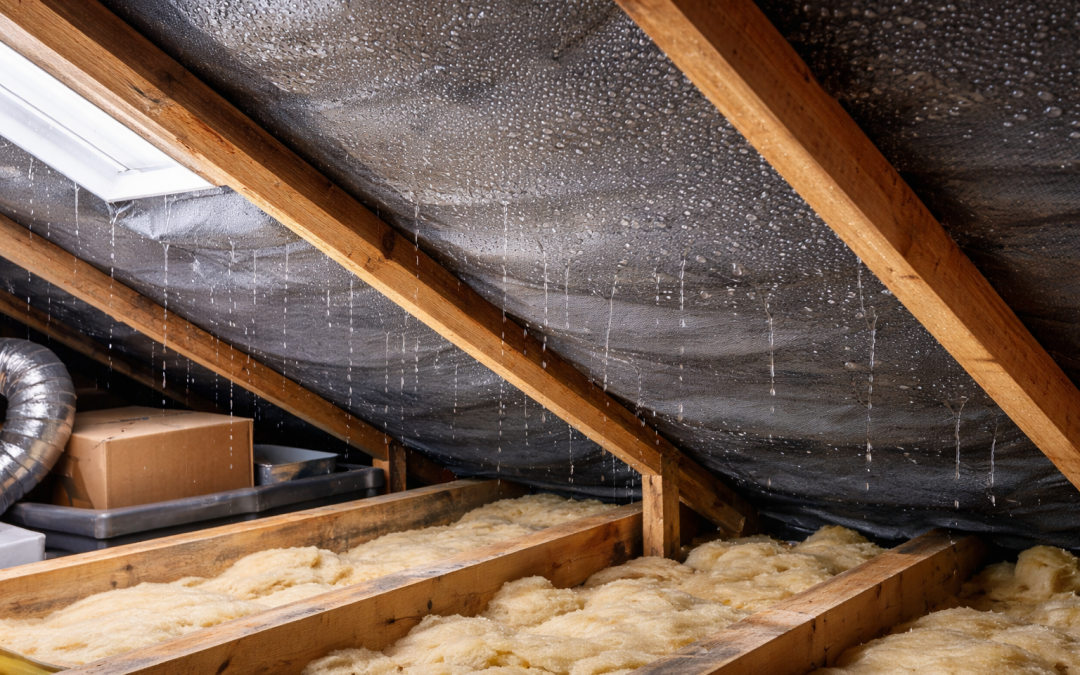
Warm, moist air rises from the rooms below and enters the loft. Because a well-insulated loft should be cold, the air cools quickly and releases moisture. This moisture often settles on the coldest surfaces, usually the underside of the roof covering, close to key roof timbers such as rafters and purlins.
Why Can This Be a Problem?
Timber is a durable material and can last for centuries if it stays dry. Problems only arise when timber becomes damp and stays damp for lengthy periods.
Persistent moisture can create the right conditions for:
- Timber decay (rot)
- Wood-boring insects
- Long-term weakening of roof timbers
So, while condensation itself is not unusual, ongoing dampness can cause issues if it is not able to dry out.
Is Loft Condensation Always a Cause for Concern?
Not necessarily.
Most lofts are designed to be well ventilated, and this airflow helps any moisture evaporate before damage occurs. You will often see ventilation openings at the eaves or roof level, and even small gaps between tiles can allow enough airflow.
Seasonal changes also help. Lofts can become very warm during summer, and this heat helps dry out timbers naturally, reducing the risk of rot.
Problems are more likely to occur if ventilation has been reduced or blocked — for example, by poorly installed insulation or spray foam systems — or if unusually high levels of moisture are entering the loft and cannot escape.
It is also important to confirm that any dampness is caused by condensation and not by a roof leak or gutter issue, which would need immediate attention.
What Should You Do If You are Concerned?
If you suspect condensation is causing a problem in your loft, the best step is to have it professionally checked.
A surveyor will typically:
- Measure moisture levels in the timbers.
- Check humidity levels in the loft.
- Inspect roof timbers for signs of rot or insect activity.
- Assess ventilation and insulation levels.
- Check the roof covering for leaks.
This helps determine whether the condensation is harmless or something that needs addressing.
Buying a property?
If you are purchasing a home and want peace of mind about the loft (and anything else hiding up there), a Homebuyer Survey or Building Survey will usually include a loft inspection where safe access is possible. The report will explain exactly what is going on and whether any action is needed.