
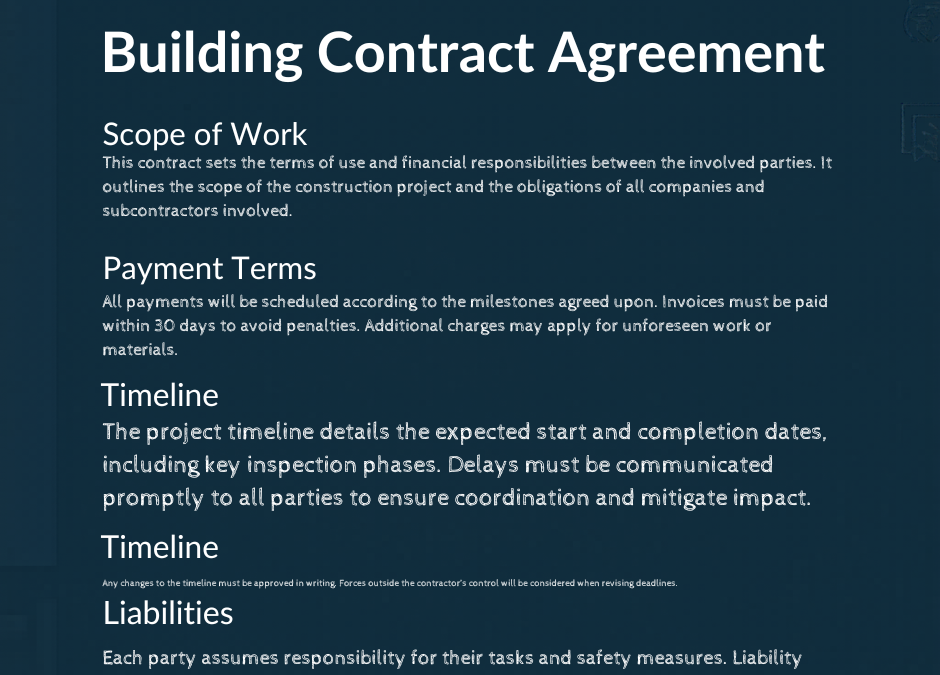
One of the biggest worries when conducting a home building project is that things could go wrong, the contractor might ask for more money, stop work, or not complete the job at all. Without proper protections, this can lead to serious financial stress, delays, and even disputes.
This is why having a written building contract in place before work starts is so important.
Standard Contracts in the UK
In the UK, there are standard form building contracts designed to cover most domestic projects. For typical home builds or extensions, the most used is the JCT Minor Works Building Contract (JCT MW).
The JCT MW contract is written by professionals and covers the key areas where problems can occur:
- Payment procedures
- Handling changes to the works (variations)
- Dealing with delays
- Resolving disputes
Even if you do not have a contract drafted from scratch, agreeing in writing that the works will follow the JCT MW gives you legal protection.
Preparing Before Work Starts
Before the contractor sets foot on site, make sure you have everything in writing:
- A detailed, priced schedule of works
- A construction programme, including a target completion date.
- The number of liquidated damages if the project runs late.
- A signed agreement that the works will be conducted according to the JCT MW contract.
Managing Changes During the Project
Many disputes start when changes are made on site. If your contractor begins work based on a verbal instruction, you might be surprised by extra costs later.
To avoid this:
- Get all variations and instructions in writing.
- Agree the price before the work starts.
Yes, it is paperwork, but it prevents stress and unexpected bills later.
What If the Contractor Is not Performing?
If the contractor is slow or unresponsive, here is what you can do:
- Liquidated damages:
- If agreed in your contract, you can deduct damages for each day the project runs over the completion date.
- It is best to first notify the contractor in writing, giving them a brief period (e.g., 7 days) to improve progress.
- Non-performance before completion:
- If there is no agreed completion date, or the contractor is not doing the work, write to them.
- Give a deadline (e.g., 14 days) to start work, and state that you may appoint another contractor if there is no progress.
- Only pay for work that has been done and verified.
Getting Professional Help
For most homeowners, managing a dispute with a contractor can be overwhelming. If a generous sum of money is at stake, it is worth seeking advice from a quantity surveyor, building surveyor, or other qualified professional. Their fees are usually far less than the potential cost of losing a dispute.
Key Takeaways
- Always have a written contract before work starts.
- Make sure all instructions and variations are agreed in writing.
- Keep a record of progress and payments.
- Seek professional advice if disputes arise.
A little preparation upfront can save you huge stress and money later.