
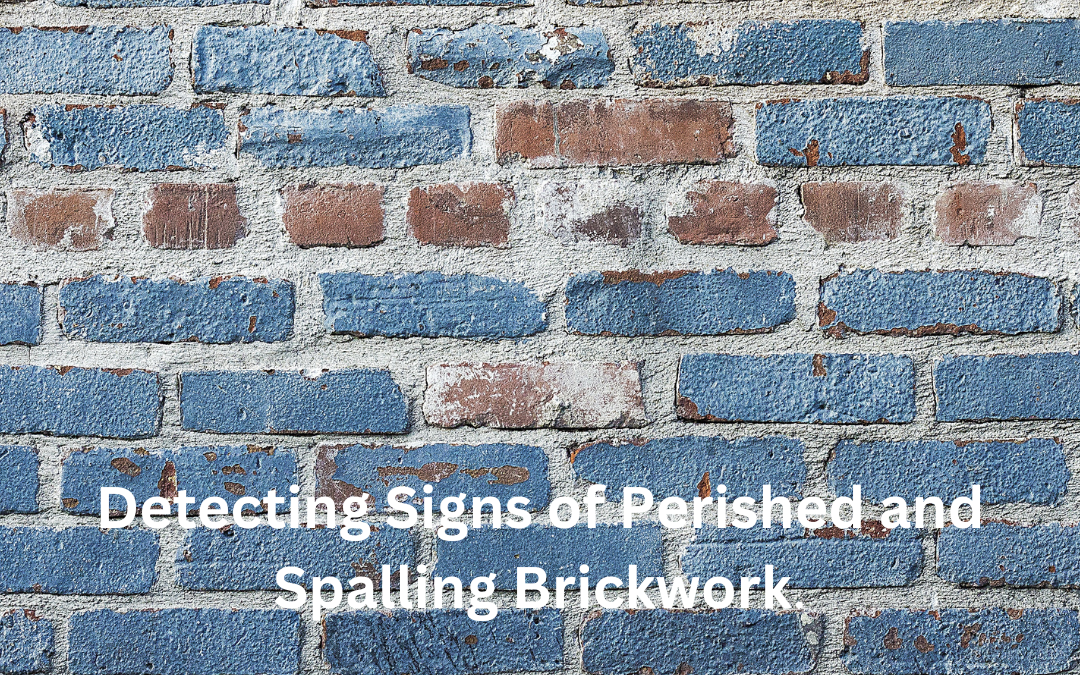
Detecting Signs of Perished and Spalling Brickwork
Damaged brickwork is a common defect that we as surveyors frequently observe. This issue is often connected to other underlying factors that may have caused or exacerbated the deterioration. Simple choices, such as using materials that clash with the building’s original design, can accelerate masonry decay, and even cause it to crumble. But there is no need to worry! There are reliable ways to repair and restore brickwork, even when it is severely compromised.
if you have any questions or need advice about perished brickwork and building issues, please reach out to our team today!
How Cement Mortar Contributes to Perished Brickwork Issues
Cement-based mortars and renders are frequently linked to this kind of defect. Cement pointing tends to trap moisture around the brick’s edges, and when freezing temperatures cause the liquid to expand, it can result in the brick’s surface breaking away. This can lead to further, faster deterioration. Similarly, cement renders can trap moisture behind their surface, leading to dampness and accelerated decay. As Surveyors we advise using lime mortars, renders, and plasters, as these materials are breathable and allow trapped moisture to escape more effectively.
We offer comprehensive inspections and surveys to evaluate the issue thoroughly, providing you with the necessary guidance and advice before you proceed with purchasing your property.
Understanding and Addressing Spalling Brickwork
Spalling brickwork involves the cracking or breaking off parts of bricks or building materials beneath the surface. If you have noticed flaking, peeling, cracking, crumbling, or chipping of your bricks or stone, it may be due to water penetration. Spalling often occurs when rainwater enters the bricks, freezes, and expands within any gaps or holes. As the water thaws, it leaves the brickwork damaged.
While spalling bricks might initially seem like just a cosmetic flaw, neglecting this issue can lead to significant structural damage over time. Repair costs can become substantial if the problem is not addressed early. Spalling is more commonly found in older properties and in walls with cement pointing. Homeowners often notice mortar cracks during the winter months when water trapped within the walls freezes, causing existing cracks and holes to expand.
When damaged gutters and poorly installed window and door frames are also present, this defect can escalate into a more significant problem. To properly address painted spalling brickwork, it is essential to completely remove the existing masonry paint and replace it with lime wash or mineral paint, which will help prevent future issues.
Reviving Worn Brickwork: Essential Repair Techniques.
Replacing damaged bricks is usually the best solution for perished brickwork, although it is not as straightforward as it might appear. If frost damage makes replacement or repair too costly, applying a wall covering may be necessary to improve the building’s look and prevent further damage. Lime render is a suitable option for covering perished brickwork, but it is important to know that once applied, it is almost impossible to remove without causing additional harm. As mentioned earlier, cement render should be avoided, as it can lead to significant structural damage.
If your bricks are in solid condition and you prefer to keep the brick facade intact, you might think about applying a damp-proof clear coating. However, this is discouraged because it can lead to trapped moisture, which may result in additional wall damage.
If you are unsure of the best approach, feel free to reach out to us. We are more than happy to discuss your options and provide clear, unbiased guidance.